2025 ・ MSc Dissertation ・ UX Research ・ Design Systems ・ DX

Design System Principles

For Collaborative Parity through the Lens of Developer Experience

  • Timeline

    Jul – Sep 2025, 3 months

  • Role

    Principle Researcher

  • Participants

    15 Professionals (Designers and Developers)

  • Methodology

    Qualitative Research: In-depth Interviews, Participatory Workshops
Context & Hypothesis

The Invisible Gap in Design System Practices

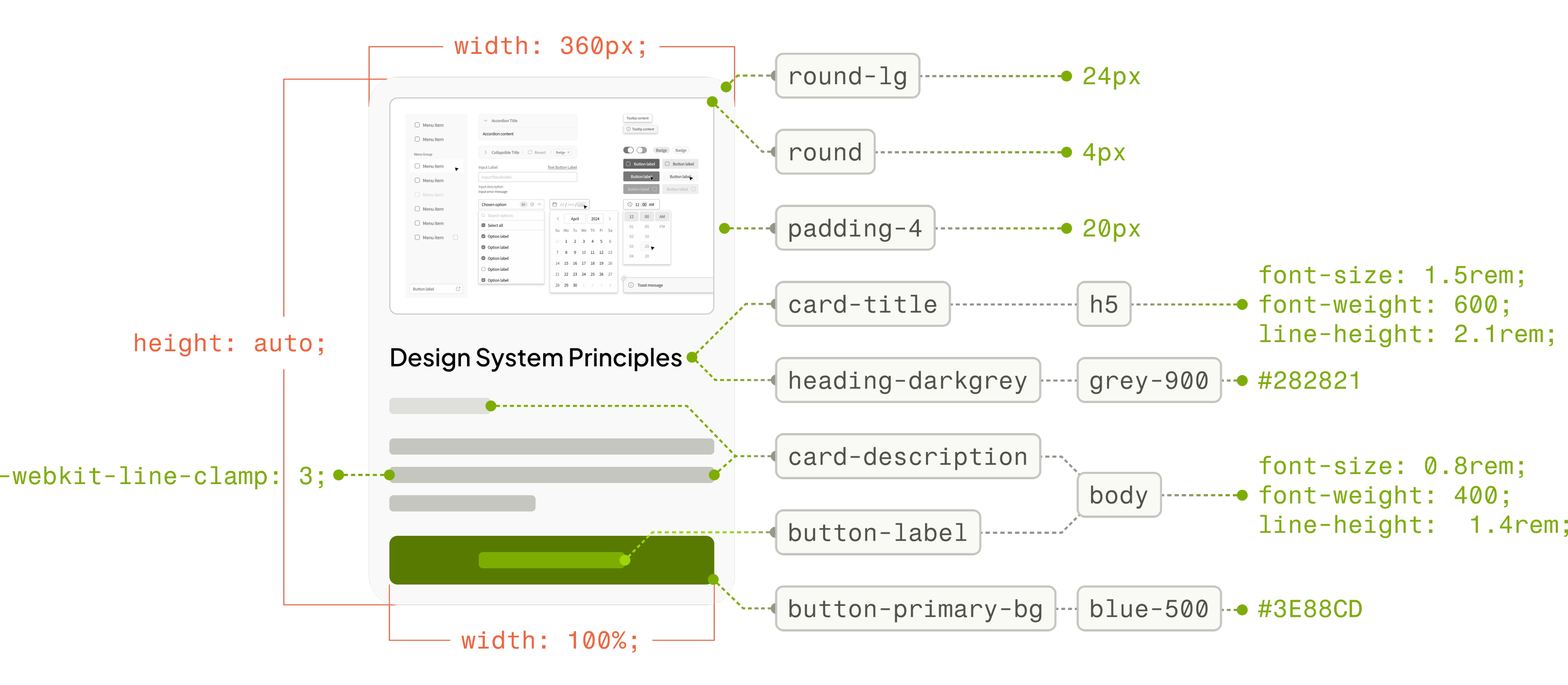
While design systems are central to modern product development, a persistent gap exists between what designers produce and what developers implement. Most industry guidance remains design-centric, often neglecting the technical context of the implementers.

Research Goal

This research hypothesised that establishing developer-friendly, actionable guidelines would fill the gap and streamline the collaboration. So professionals can move beyond defining visual assets and establish a collaborative infrastructure that enhances engineering efficiency.

Research and Findings

Research Design: From Discovery to Validation

  1. Discovery Phase

    In-depth InterviewsSemi-structured interviews with 11 participants were conducted to extract specific friction points in real-world collaboration, identifying their root causes

  2. Design Phase

    Preliminary GuidelinesBased on these points, a set of preliminary guidelines was established, focusing on filling “gaps” and framing key discussion areas.

  3. Validation Phase

    Participatory WorkshopsThree workshop sessions with designer-developer pairs were run to stress-test these preliminary guidelines in professional settings.

Key Friction Points

Passive EngagementDevelopers tend to be excluded from early planning, discovering technical constraints after design finalisation.

Lack of SpecificationMissing behaviours and edge cases increase cognitive load, forcing engineers to rely on individual interpretation.

Cultural Adoption GapSystems are perceived as a “one-way design deliverable” rather than shared infrastructure, leading to conflicting priorities.

Deep-Dive: From Compliance to Governance

Beyond Rules: Scaffolds for Negotiation

The validation phase exposed a critical flaw: in complex environments like legacy codebases or high-pressure delivery cycles, prescriptive rules created new frictions. Teams viewed fixed instructions not as support, but as bureaucratic obstacles that ignored technical realities.

“Guidelines shouldn’t be blocking. If we’re too rigid... it can be counter productive.”

Senior Developer, Workshop B

This necessitated a strategic shift from enforcing compliance to facilitating alignment. The solution evolved into adaptable principles, a negotiation framework that empowers teams to agree on shared outcomes while enabling mutual understanding on both sides.

Final Output

The Design System Principles

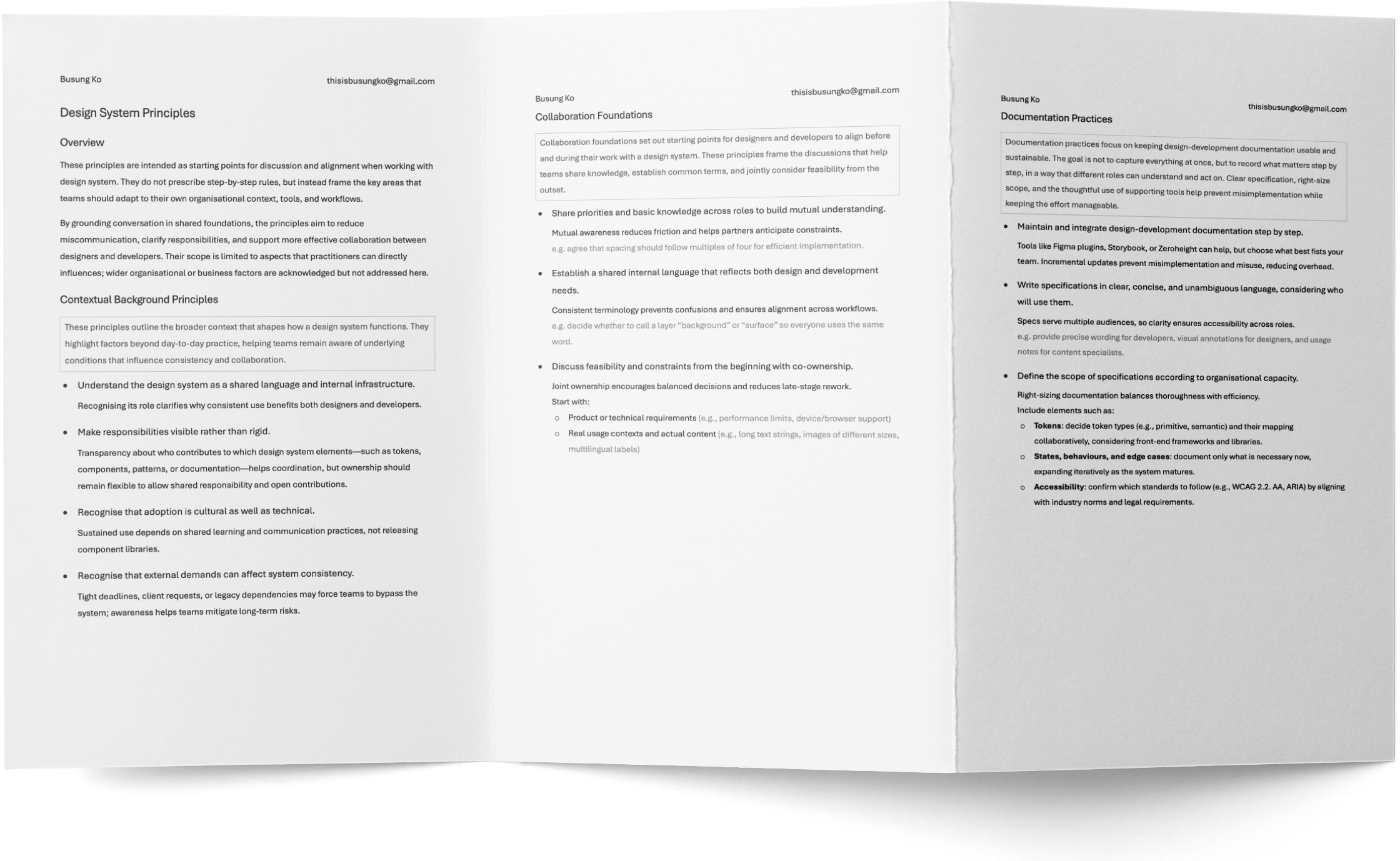
The final output is a comprehensive 3-page framework designed for practitioners navigating their first design system adoption or seeking to establish foundational collaboration. It moves beyond rigid rules to prioritise operational alignment across three core areas.

  1. Contextual Background

    Move from rigid roles to visible responsibilities by making ownership transparent yet flexible to encourage open contribution.

  2. Collaboration Foundations

    Shift from post-design handoff to pre-design feasibility by discussing technical constraints and shared terminology early to prevent late-stage rework.

  3. Documentation Practices

    Transition from exhaustive archiving to right-sized execution by prioritising implementation-critical details over comprehensive descriptions.

  4. Download the full principles (PDF)

Reflection

Optimising the Build Environment

This project established a critical perspective shift by viewing design systems through the lens of developer experience (DX). The framework ensures that technical constraints are not barriers but essential design conditions that must be negotiated from the outset.

Takeaways

Designing the ConversationThe most effective systems do not merely dictate pixels. They facilitate the necessary discussions between roles to bridge the implementation gap.

System StrategyThe focus has shifted from surface-level interface design to optimising the environment where products are built, ensuring design system function as alive, shared infrastructure.

Interested in the full dissertation?

I am happy to share the complete research paper upon request. Please feel free to reach out via email.

2025 ・ MSc Dissertation ・ UX Research ・ Design Systems ・ DX

Design System Principles

For Collaborative Parity through the Lens of Developer Experience

  • Timeline

    Jul – Sep 2025, 3 months

  • Role

    Principle Researcher

  • Participants

    15 Professionals (Designers and Developers)

  • Methodology

    Qualitative Research: In-depth Interviews, Participatory Workshops
Context & Hypothesis

The Invisible Gap in Design System Practices

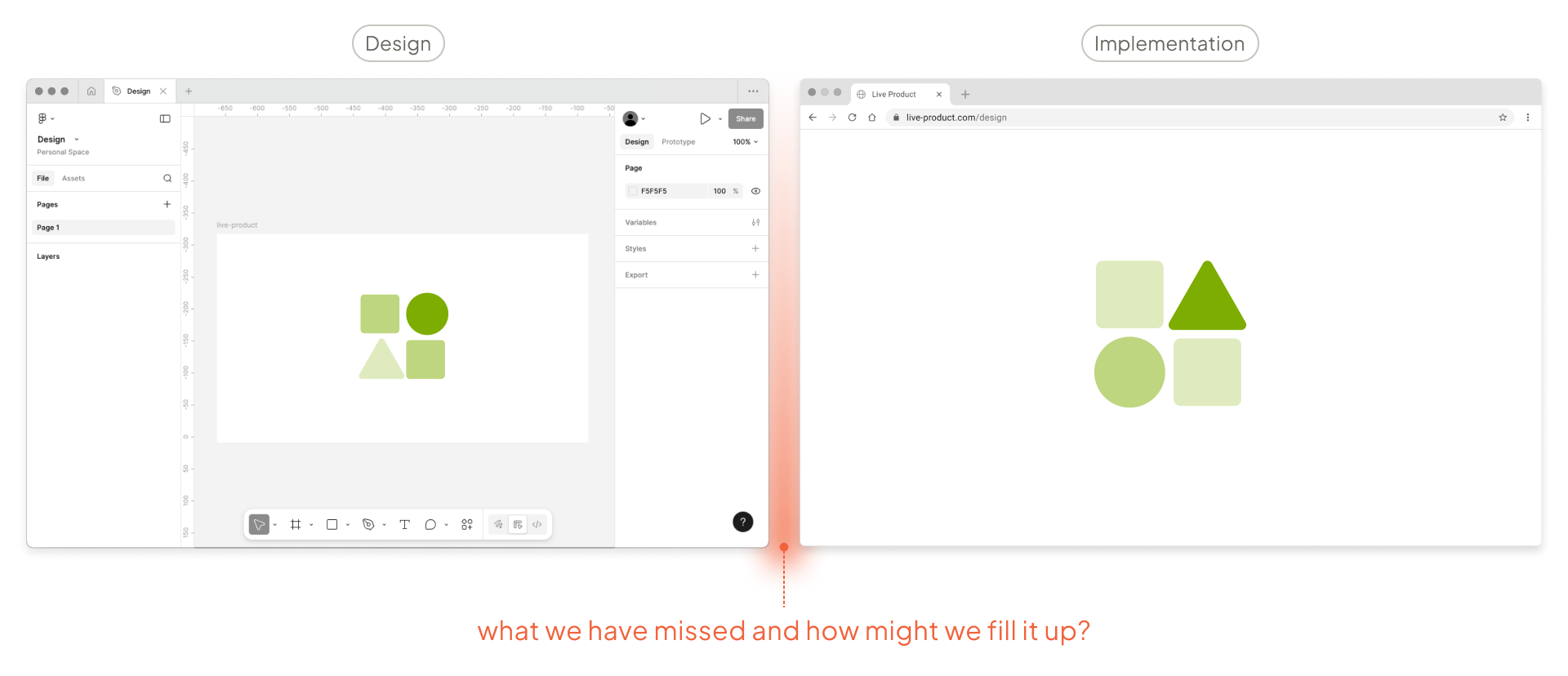
While design systems are central to modern product development, a persistent gap exists between what designers produce and what developers implement. Most industry guidance remains design-centric, often neglecting the technical context of the implementers.

Research Goal

This research hypothesised that establishing developer-friendly, actionable guidelines would fill the gap and streamline the collaboration. So professionals can move beyond defining visual assets and establish a collaborative infrastructure that enhances engineering efficiency.

Research and Findings

Research Design: From Discovery to Validation

  1. Discovery Phase

    In-depth InterviewsSemi-structured interviews with 11 participants were conducted to extract specific friction points in real-world collaboration, identifying their root causes

  2. Design Phase

    Preliminary GuidelinesBased on these points, a set of preliminary guidelines was established, focusing on filling “gaps” and framing key discussion areas.

  3. Validation Phase

    Participatory WorkshopsThree workshop sessions with designer-developer pairs were run to stress-test these preliminary guidelines in professional settings.

Key Friction Points

Passive EngagementDevelopers tend to be excluded from early planning, discovering technical constraints after design finalisation.

Lack of SpecificationMissing behaviours and edge cases increase cognitive load, forcing engineers to rely on individual interpretation.

Cultural Adoption GapSystems are perceived as a “one-way design deliverable” rather than shared infrastructure, leading to conflicting priorities.

Deep-Dive: From Compliance to Governance

Beyond Rules: Scaffolds for Negotiation

The validation phase exposed a critical flaw: in complex environments like legacy codebases or high-pressure delivery cycles, prescriptive rules created new frictions. Teams viewed fixed instructions not as support, but as bureaucratic obstacles that ignored technical realities.

“Guidelines shouldn’t be blocking. If we’re too rigid... it can be counter productive.”

Senior Developer, Workshop B

This necessitated a strategic shift from enforcing compliance to facilitating alignment. The solution evolved into adaptable principles, a negotiation framework that empowers teams to agree on shared outcomes while enabling mutual understanding on both sides.

Final Output

The Design System Principles

The final output is a comprehensive 3-page framework designed for practitioners navigating their first design system adoption or seeking to establish foundational collaboration. It moves beyond rigid rules to prioritise operational alignment across three core areas.

  1. Contextual Background

    Move from rigid roles to visible responsibilities by making ownership transparent yet flexible to encourage open contribution.

  2. Collaboration Foundations

    Shift from post-design handoff to pre-design feasibility by discussing technical constraints and shared terminology early to prevent late-stage rework.

  3. Documentation Practices

    Transition from exhaustive archiving to right-sized execution by prioritising implementation-critical details over comprehensive descriptions.

  4. Download the full principles (PDF)

Reflection

Optimising the Build Environment

This project established a critical perspective shift by viewing design systems through the lens of developer experience (DX). The framework ensures that technical constraints are not barriers but essential design conditions that must be negotiated from the outset.

Takeaways

Designing the ConversationThe most effective systems do not merely dictate pixels. They facilitate the necessary discussions between roles to bridge the implementation gap.

System StrategyThe focus has shifted from surface-level interface design to optimising the environment where products are built, ensuring design system function as alive, shared infrastructure.

Interested in the full dissertation?

I am happy to share the complete research paper upon request. Please feel free to reach out via email.

2025 ・ MSc Dissertation ・ UX Research ・ Design Systems ・ DX

Design System Principles

For Collaborative Parity through the Lens of Developer Experience

  • Timeline

    Jul – Sep 2025, 3 months

  • Role

    Principle Researcher

  • Participants

    15 Professionals (Designers and Developers)

  • Methodology

    Qualitative Research: In-depth Interviews, Participatory Workshops
Context & Hypothesis

The Invisible Gap in Design System Practices

While design systems are central to modern product development, a persistent gap exists between what designers produce and what developers implement. Most industry guidance remains design-centric, often neglecting the technical context of the implementers.

Research Goal

This research hypothesised that establishing developer-friendly, actionable guidelines would fill the gap and streamline the collaboration. So professionals can move beyond defining visual assets and establish a collaborative infrastructure that enhances engineering efficiency.

Research and Findings

Research Design: From Discovery to Validation

  1. Discovery Phase

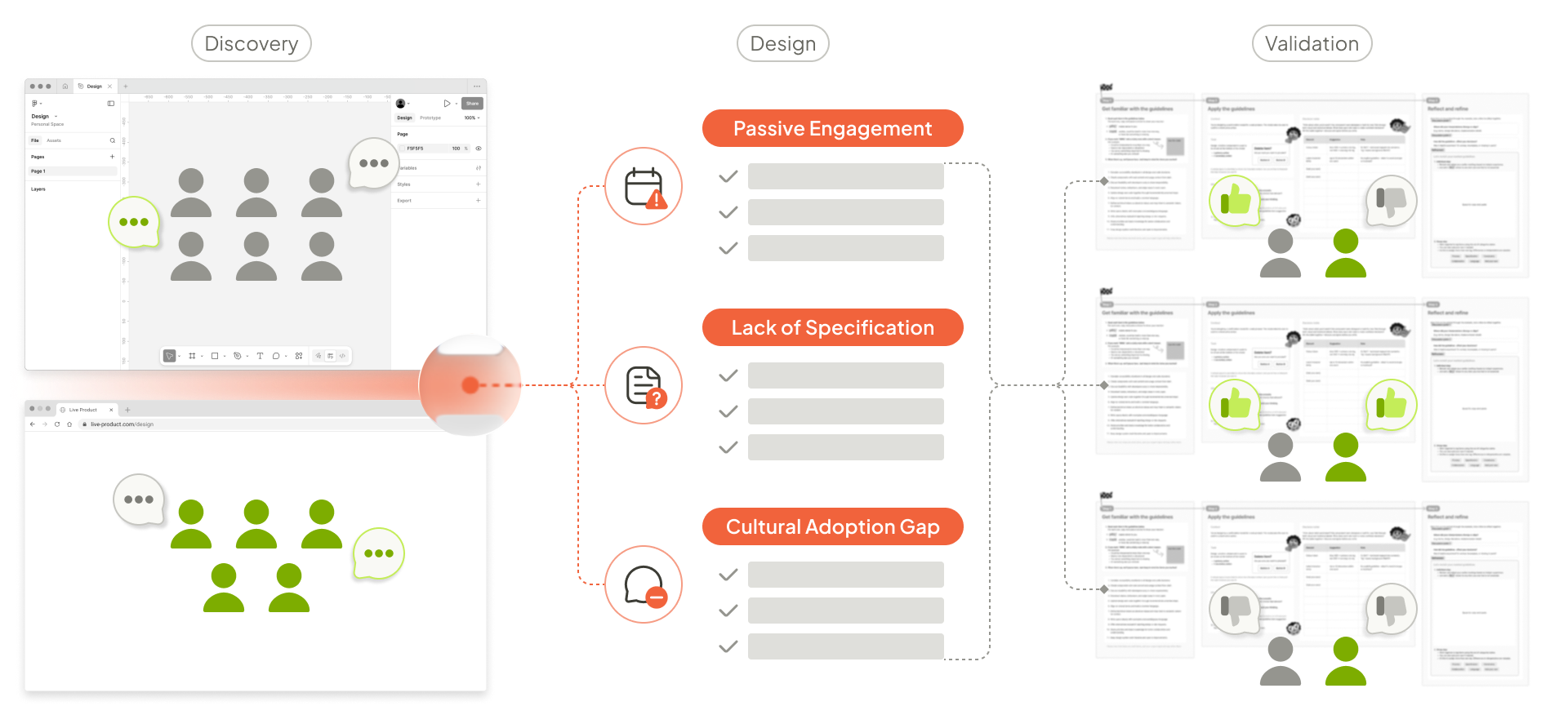
    In-depth InterviewsSemi-structured interviews with 11 participants were conducted to extract specific friction points in real-world collaboration, identifying their root causes

  2. Design Phase

    Preliminary GuidelinesBased on these points, a set of preliminary guidelines was established, focusing on filling “gaps” and framing key discussion areas.

  3. Validation Phase

    Participatory WorkshopsThree workshop sessions with designer-developer pairs were run to stress-test these preliminary guidelines in professional settings.

Key Friction Points

Passive EngagementDevelopers tend to be excluded from early planning, discovering technical constraints after design finalisation.

Lack of SpecificationMissing behaviours and edge cases increase cognitive load, forcing engineers to rely on individual interpretation.

Cultural Adoption GapSystems are perceived as a “one-way design deliverable” rather than shared infrastructure, leading to conflicting priorities.

Deep-Dive: From Compliance to Governance

Beyond Rules: Scaffolds for Negotiation

The validation phase exposed a critical flaw: in complex environments like legacy codebases or high-pressure delivery cycles, prescriptive rules created new frictions. Teams viewed fixed instructions not as support, but as bureaucratic obstacles that ignored technical realities.

“Guidelines shouldn’t be blocking. If we’re too rigid... it can be counter productive.”

Senior Developer, Workshop B

This necessitated a strategic shift from enforcing compliance to facilitating alignment. The solution evolved into adaptable principles, a negotiation framework that empowers teams to agree on shared outcomes while enabling mutual understanding on both sides.

Final Output

The Design System Principles

The final output is a comprehensive 3-page framework designed for practitioners navigating their first design system adoption or seeking to establish foundational collaboration. It moves beyond rigid rules to prioritise operational alignment across three core areas.

  1. Contextual Background

    Move from rigid roles to visible responsibilities by making ownership transparent yet flexible to encourage open contribution.

  2. Collaboration Foundations

    Shift from post-design handoff to pre-design feasibility by discussing technical constraints and shared terminology early to prevent late-stage rework.

  3. Documentation Practices

    Transition from exhaustive archiving to right-sized execution by prioritising implementation-critical details over comprehensive descriptions.

  4. Download the full principles (PDF)

Reflection

Optimising the Build Environment

This project established a critical perspective shift by viewing design systems through the lens of developer experience (DX). The framework ensures that technical constraints are not barriers but essential design conditions that must be negotiated from the outset.

Takeaways

Designing the ConversationThe most effective systems do not merely dictate pixels. They facilitate the necessary discussions between roles to bridge the implementation gap.

System StrategyThe focus has shifted from surface-level interface design to optimising the environment where products are built, ensuring design system function as alive, shared infrastructure.

Interested in the full dissertation?

I am happy to share the complete research paper upon request. Please feel free to reach out via email.

2025 ・ MSc Dissertation ・ UX Research ・ Design Systems ・ DX

Design System Principles

For Collaborative Parity through the Lens of Developer Experience

  • Timeline

    Jul – Sep 2025, 3 months

  • Role

    Principle Researcher

  • Participants

    15 Professionals (Designers and Developers)

  • Methodology

    Qualitative Research: In-depth Interviews, Participatory Workshops
Context & Hypothesis

The Invisible Gap in Design System Practices

While design systems are central to modern product development, a persistent gap exists between what designers produce and what developers implement. Most industry guidance remains design-centric, often neglecting the technical context of the implementers.

Research Goal

This research hypothesised that establishing developer-friendly, actionable guidelines would fill the gap and streamline the collaboration. So professionals can move beyond defining visual assets and establish a collaborative infrastructure that enhances engineering efficiency.

Research and Findings

Research Design: From Discovery to Validation

  1. Discovery Phase

    In-depth InterviewsSemi-structured interviews with 11 participants were conducted to extract specific friction points in real-world collaboration, identifying their root causes

  2. Design Phase

    Preliminary GuidelinesBased on these points, a set of preliminary guidelines was established, focusing on filling “gaps” and framing key discussion areas.

  3. Validation Phase

    Participatory WorkshopsThree workshop sessions with designer-developer pairs were run to stress-test these preliminary guidelines in professional settings.

Key Friction Points

Passive EngagementDevelopers tend to be excluded from early planning, discovering technical constraints after design finalisation.

Lack of SpecificationMissing behaviours and edge cases increase cognitive load, forcing engineers to rely on individual interpretation.

Cultural Adoption GapSystems are perceived as a “one-way design deliverable” rather than shared infrastructure, leading to conflicting priorities.

Deep-Dive: From Compliance to Governance

Beyond Rules: Scaffolds for Negotiation

The validation phase exposed a critical flaw: in complex environments like legacy codebases or high-pressure delivery cycles, prescriptive rules created new frictions. Teams viewed fixed instructions not as support, but as bureaucratic obstacles that ignored technical realities.

“Guidelines shouldn’t be blocking. If we’re too rigid... it can be counter productive.”

Senior Developer, Workshop B

This necessitated a strategic shift from enforcing compliance to facilitating alignment. The solution evolved into adaptable principles, a negotiation framework that empowers teams to agree on shared outcomes while enabling mutual understanding on both sides.

Final Output

The Design System Principles

The final output is a comprehensive 3-page framework designed for practitioners navigating their first design system adoption or seeking to establish foundational collaboration. It moves beyond rigid rules to prioritise operational alignment across three core areas.

  1. Contextual Background

    Move from rigid roles to visible responsibilities by making ownership transparent yet flexible to encourage open contribution.

  2. Collaboration Foundations

    Shift from post-design handoff to pre-design feasibility by discussing technical constraints and shared terminology early to prevent late-stage rework.

  3. Documentation Practices

    Transition from exhaustive archiving to right-sized execution by prioritising implementation-critical details over comprehensive descriptions.

  4. Download the full principles (PDF)

Reflection

Optimising the Build Environment

This project established a critical perspective shift by viewing design systems through the lens of developer experience (DX). The framework ensures that technical constraints are not barriers but essential design conditions that must be negotiated from the outset.

Takeaways

Designing the ConversationThe most effective systems do not merely dictate pixels. They facilitate the necessary discussions between roles to bridge the implementation gap.

System StrategyThe focus has shifted from surface-level interface design to optimising the environment where products are built, ensuring design system function as alive, shared infrastructure.

Interested in the full dissertation?

I am happy to share the complete research paper upon request. Please feel free to reach out via email.

2025 ・ MSc Dissertation ・ UX Research ・ Design Systems ・ DX

Design System Principles

For Collaborative Parity through the Lens of Developer Experience

  • Timeline

    Jul – Sep 2025, 3 months

  • Role

    Principle Researcher

  • Participants

    15 Professionals (Designers and Developers)

  • Methodology

    Qualitative Research: In-depth Interviews, Participatory Workshops

Context & Hypothesis

The Invisible Gap in Design System Practices

While design systems are central to modern product development, a persistent gap exists between what designers produce and what developers implement. Most industry guidance remains design-centric, often neglecting the technical context of the implementers.

Research Goal

This research hypothesised that establishing developer-friendly, actionable guidelines would fill the gap and streamline the collaboration. So professionals can move beyond defining visual assets and establish a collaborative infrastructure that enhances engineering efficiency.

Research and Findings

Research Design: From Discovery to Validation

  1. Discovery Phase

    In-depth InterviewsSemi-structured interviews with 11 participants were conducted to extract specific friction points in real-world collaboration, identifying their root causes

  2. Design Phase

    Preliminary GuidelinesBased on these points, a set of preliminary guidelines was established, focusing on filling “gaps” and framing key discussion areas.

  3. Validation Phase

    Participatory WorkshopsThree workshop sessions with designer-developer pairs were run to stress-test these preliminary guidelines in professional settings.

Key Friction Points

Passive EngagementDevelopers tend to be excluded from early planning, discovering technical constraints after design finalisation.

Lack of SpecificationMissing behaviours and edge cases increase cognitive load, forcing engineers to rely on individual interpretation.

Cultural Adoption GapSystems are perceived as a “one-way design deliverable” rather than shared infrastructure, leading to conflicting priorities.

Deep-Dive: From Compliance to Governance

Beyond Rules: Scaffolds for Negotiation

  • The validation phase exposed a critical flaw: in complex environments like legacy codebases or high-pressure delivery cycles, prescriptive rules created new frictions. Teams viewed fixed instructions not as support, but as bureaucratic obstacles that ignored technical realities.

“Guidelines shouldn’t be blocking. If we’re too rigid... it can be counter productive.”

Senior Developer, Workshop B

  • This necessitated a strategic shift from enforcing compliance to facilitating alignment. The solution evolved into adaptable principles, a negotiation framework that empowers teams to agree on shared outcomes while enabling mutual understanding on both sides.

Final Output

The Design System Principles

The final output is a comprehensive 3-page framework designed for practitioners navigating their first design system adoption or seeking to establish foundational collaboration. It moves beyond rigid rules to prioritise operational alignment across three core areas.

  1. Contextual Background

    Move from rigid roles to visible responsibilities by making ownership transparent yet flexible to encourage open contribution.

  2. Collaboration Foundations

    Shift from post-design handoff to pre-design feasibility by discussing technical constraints and shared terminology early to prevent late-stage rework.

  3. Documentation Practices

    Transition from exhaustive archiving to right-sized execution by prioritising implementation-critical details over comprehensive descriptions.

  4. Download the full principles (PDF)

Reflection

Optimising the Build Environment

This project established a critical perspective shift by viewing design systems through the lens of developer experience (DX). The framework ensures that technical constraints are not barriers but essential design conditions that must be negotiated from the outset.

Takeaways

Designing the ConversationThe most effective systems do not merely dictate pixels. They facilitate the necessary discussions between roles to bridge the implementation gap.

System StrategyThe focus has shifted from surface-level interface design to optimising the environment where products are built, ensuring design system function as alive, shared infrastructure.

Interested in the full dissertation?

I am happy to share the complete research paper upon request. Please feel free to reach out via email.